Budget 2024 made the most significant changes to capital gains taxation in India in years. If you haven't updated your mental model since then, you're working with incorrect numbers.
The changes took effect from July 23, 2024 — transactions before that date are taxed under the old rates, transactions after under the new ones. For FY 2024–25 filings, this means some people had a split year.
The Key Changes
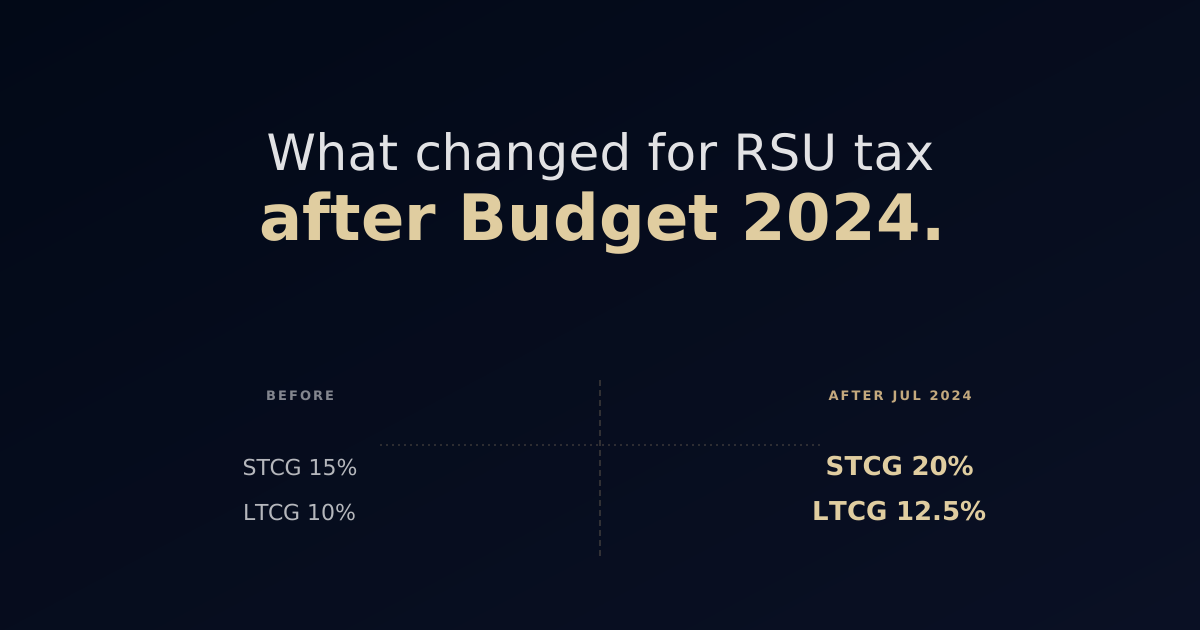
Old rates (before July 23, 2024): STCG on equity: 15% LTCG on equity: 10%, above ₹1 lakh exemption
New rates (from July 23, 2024 onward): STCG on equity: 20% LTCG on equity: 12.5%, above ₹1.25 lakh exemption
The STCG rate increase is significant — a 33% increase in the rate. For an employee selling RSU shares before the 24-month mark, the tax on those sales went up meaningfully.
The LTCG rate increase is smaller (10% to 12.5%), and partially offset by the higher exemption threshold (₹1L to ₹1.25L).
Source: Finance Bill 2024: https://indiabudget.gov.in/doc/Finance_Bill_2024.pdf Source: CBDT press release on Budget 2024 capital gains: https://www.incometaxindia.gov.in/news
What it Means for Your Sell Decisions
The increase in STCG rate makes the 24-month LTCG threshold more valuable. The after-tax return difference between selling at 23 months vs 25 months just got wider.
Under old rates: selling at 23 months vs 25 months on a ₹5 lakh gain meant a tax difference of ₹25,000 (15% vs 10% on ₹5L, adjusting for ₹1L exemption).
Under new rates: the same comparison now shows ₹37,500 difference (20% STCG vs 12.5% LTCG on ₹5L, adjusting for ₹1.25L exemption).
The argument for waiting has gotten stronger.
The Fy 2024–25 Complexity: Split-year Calculations
If you sold RSU shares in FY 2024–25, you potentially had: - Sales before July 23, 2024 → old rates apply (STCG 15%, LTCG 10%) - Sales after July 23, 2024 → new rates apply (STCG 20%, LTCG 12.5%)
When filing your FY 2024–25 ITR, the ITR form handles this automatically — there are separate fields for pre-July 23 and post-July 23 transactions. Your CA should ensure the transactions are allocated to the correct period.
If you calculate your gains manually (for advance tax or for personal planning), track which date each sale happened.
What Didn't Change
The basic two-event structure: perquisite at vest (income tax), capital gains at sale — this is unchanged. The 24-month threshold for foreign-listed shares: unchanged. Schedule FA and disclosure requirements: unchanged (and actually tightened slightly — see below). The SBI TTBR conversion requirement: unchanged.
Budget 2025 Additions
Union Budget 2025 added a few clarifications specifically relevant to RSU holders:
TDS transparency: Employers are now mandated to deduct and report TDS on foreign share FMV more transparently in their returns, to reduce mismatches between Form 16 and the AIS/Form 26AS. If you've had discrepancies between your Form 16 and AIS in past years, this is the government's attempt to fix that.
Capital gains reporting alignment: ITR-2 and ITR-3 now have improved Schedule FA alignment with the capital gains schedule, making it easier to correctly link foreign asset transactions to their gains/losses.
Source: Union Budget 2025 — Finance Bill 2025: https://indiabudget.gov.in
📊 TABLE: "Before and After Budget 2024 — RSU Capital Gains Rates" [Insert here: comparison table] Type | Before July 23, 2024 | After July 23, 2024 STCG on listed equity | 15% | 20% LTCG on listed equity | 10% above ₹1L exemption | 12.5% above ₹1.25L exemption Effective LTCG rate on ₹5L gain | 9% (after exemption) | 10.25% (after exemption) Impact of waiting past 24 months | Saves 5% on gains | Saves 7.5% on gains
How Rovia Can Help
If you haven't updated your tax planning assumptions since July 2024, now is a good time. Rovia will review your existing lot positions, recalculate the LTCG vs STCG decision with the new rates, and update your sell schedule accordingly.
The numbers have changed. The decisions should too.