Tax-loss harvesting sounds like something only wealth managers do for people with ₹10 crore portfolios. In practice, if you've been vesting RSUs for more than two or three years, you almost certainly have the raw material to do it yourself.
The concept is simple: sell shares that are trading below your vest-day cost basis to realise a capital loss, then use that loss to offset capital gains from your other sales.
What Makes Rsu Portfolios Good for Harvesting
A typical RSU portfolio has multiple lots from different vest dates — each with its own cost basis (the FMV on that vest date). Some of those lots will have a higher cost basis than the current price. Those are your harvestable lots.
This situation is especially common when: - The stock had a strong run before your vest, then corrected - You vested during a peak period and the stock has since fallen - You work at a company that went through a significant share price decline (Meta 2022, Freshworks post-IPO, etc.)
The good news: even in a stock that's generally risen, you'll often find specific lots where the vest-day FMV was higher than today's price — simply because of quarterly price volatility.
The Mechanics
Step 1: Identify your harvestable lots. In your brokerage account, look at the Tax Lots section. Find any lot where the "gain/loss" column shows a negative number. These are your underwater lots.
Step 2: Calculate the loss. The capital loss per share = current price − vest-day FMV (in INR terms). Multiply by the number of shares in the lot.
Step 3: Decide whether to harvest. Is the tax saving on the loss worth the transaction cost and the risk of missing a recovery? If you think the stock will recover strongly, harvesting and missing the recovery might cost more than the tax you'd save.
Step 4: If yes, sell the lot. Specify the lot in your sell order (see the lot selection post for instructions).
Step 5: Reinvest the proceeds. To maintain market exposure, you can immediately reinvest in a different stock or ETF. The loss is still realised; you're just not sitting in cash.
Step 6: Verify the loss can be carried forward. File your ITR on time — late filing forfeits the carry-forward right.
Indian Tax Rules on Harvesting (different From Us)
The US has a "wash sale" rule: if you sell an asset at a loss and buy the same asset within 30 days, the loss is disallowed.
India does not have an equivalent wash sale rule. You can sell shares of a company at a loss and immediately repurchase shares of the same company — the loss is still valid.
This is useful: if you want to harvest the loss but also want to maintain exposure to that specific company's stock, you can sell the loss lot and repurchase immediately (or very shortly after).
Matching Losses With Gains: the Planning Calendar
Tax-loss harvesting is most valuable when you have gains in the same financial year that need to be offset.
If you're planning to sell some STCG lots (short-term, taxed at 20%), look for STCG loss lots to sell first. The loss offsets the gain, reducing your taxable amount.
If you have LTCG lots to sell, look for LTCG loss lots (held more than 24 months and underwater).
The best time to do this review: October or November, before the year-end. This gives you time to see what gains you've already realised and how much loss capacity you need to offset them.
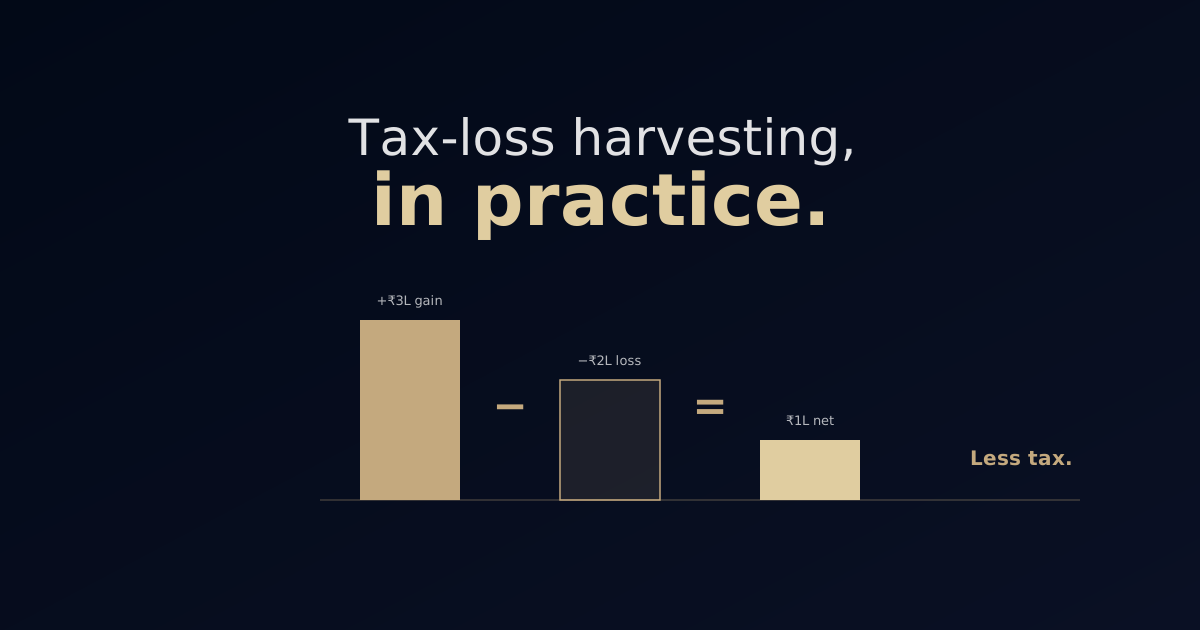
📊 TABLE: "Tax-Loss Harvesting: A Planning Example" [Insert here: table] Position | Type | Gain/Loss | Action | Tax impact Lot A: 100 shares, +₹3L gain | STCG | +₹3,00,000 | Sell | ₹60,000 STCG tax Lot B: 80 shares, −₹2L loss | STCG | −₹2,00,000 | Harvest (sell) | −₹2,00,000 loss offsets Lot A Net STCG after harvesting | — | ₹1,00,000 | — | ₹20,000 tax (instead of ₹60,000) Tax saved | — | — | — | ₹40,000
Carry-forward: When You Don't Have Gains This Year
If you realise losses but don't have gains to offset in the same year, the loss is carried forward. Up to eight financial years. You can use it against future capital gains as they arise.
This means even if harvesting doesn't save tax this year, you're building a tax asset for future years. Worth doing, especially for large losses on stocks that have significantly underperformed.
How Rovia Can Help
Rovia does a loss-harvesting review as part of our annual equity check-in — identifying all underwater lots, calculating the available loss, and showing you the optimal harvest sequence given your planned gains for the year.
Source: Section 74, Income Tax Act — carry-forward of capital losses: https://incometaxindia.gov.in Source: Tax-loss harvesting in India — no wash sale equivalent: see CBDT capital gains provisions