Every year, a meaningful number of Indian tech employees with RSUs file the wrong income tax return form. The most common mistake: filing ITR-1 (Sahaj) because it's the simplest, and because nobody told them they can't.
The cost of this mistake ranges from a notice from the Income Tax Department to a penalty for misrepresentation. It's entirely avoidable.
Here's how to determine which form applies to you in under five minutes.
Itr-1 (sahaj): Not for Rsu Holders With Foreign Assets
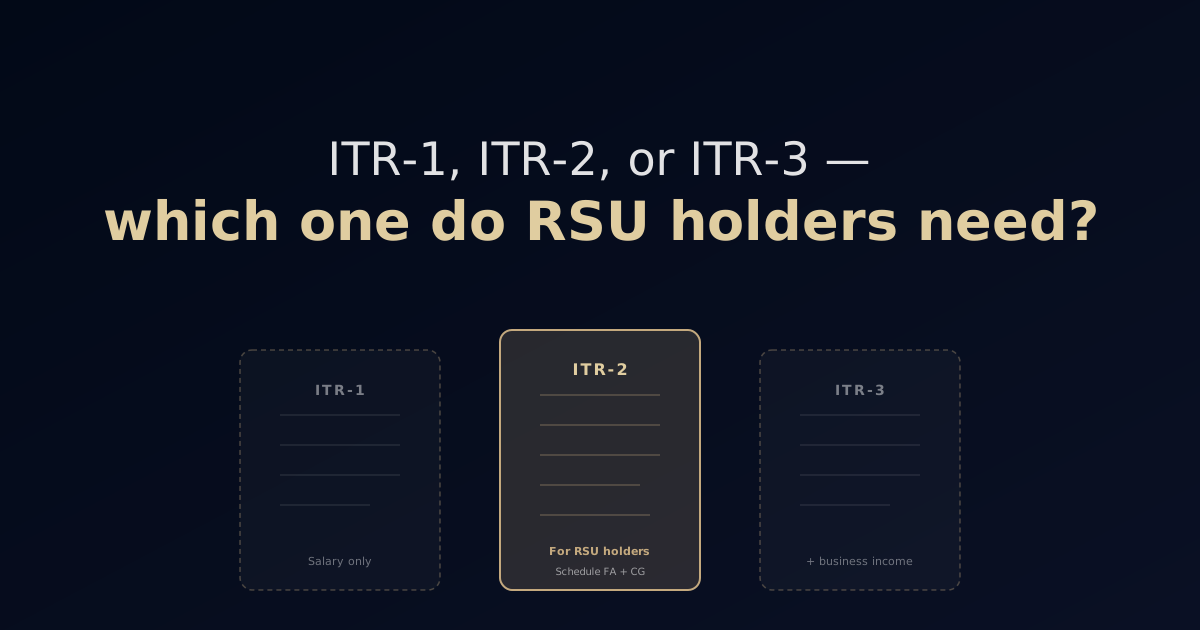
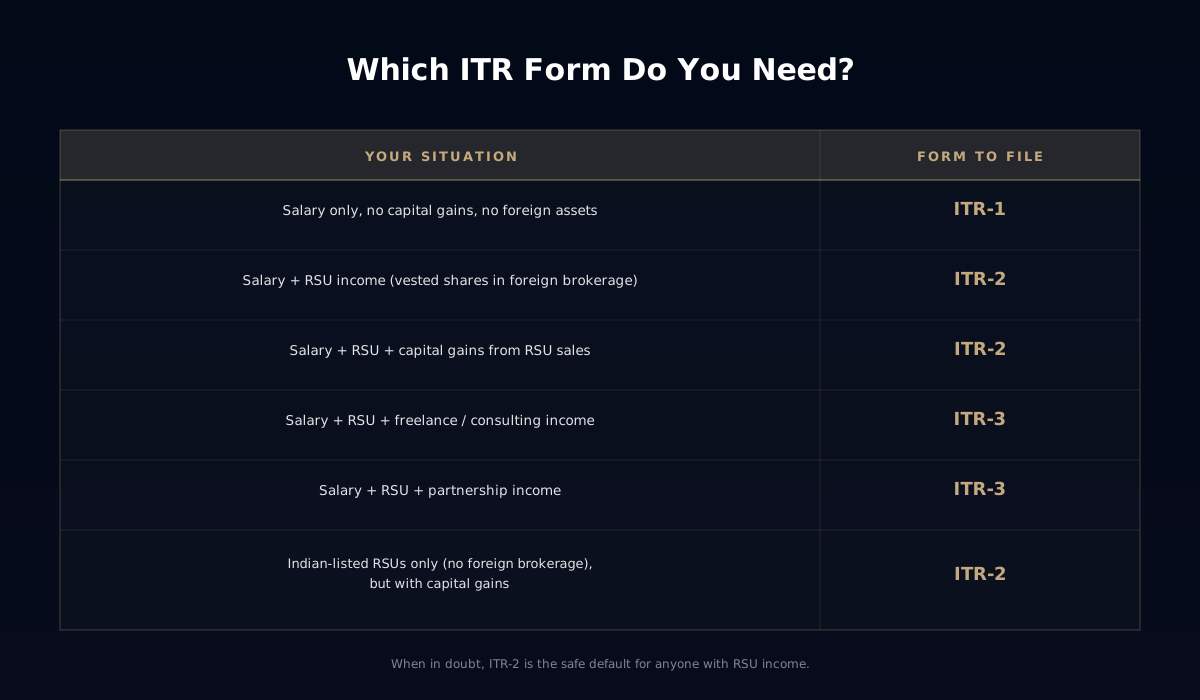
ITR-1 is the simplest form — designed for salaried individuals with income from one employer, one house property, and no complex income sources.
If you hold foreign assets — and a US brokerage account with vested RSU shares absolutely qualifies as a foreign asset — you cannot file ITR-1. Full stop.
This is not a grey area. The ITR-1 form explicitly excludes individuals who: - Hold foreign assets or have foreign income - Have capital gains - Have income from business or profession
If you have an account at Schwab, Fidelity, or any US brokerage, you are a foreign asset holder. You cannot use ITR-1.
Itr-2: the Right Form for Most Rsu Holders
ITR-2 is for individuals who have: - Salary income - Capital gains (from RSU sales, mutual funds, etc.) - Foreign assets (any foreign brokerage account) - No business or professional income
This is the form that most salaried tech employees with RSUs should be using.
ITR-2 includes Schedule CG (Capital Gains), Schedule FA (Foreign Assets), and Schedule FSI (Foreign Source Income) — all the sections you'll need to report your RSU-related income accurately.
Itr-3: If You Also Have Business Income
ITR-3 is for individuals who have salary income plus income from a business or profession. If you're doing consulting work, running a side business, are a partner in a firm, or earn freelance income alongside your tech job — ITR-3 is your form.
ITR-3 also includes all the schedules that ITR-2 does, plus the business income sections.
Why Getting This Wrong is Risky
When you file ITR-1 with a foreign brokerage account: - You're not disclosing Schedule FA — the foreign asset declaration that's legally required. - You're not reporting capital gains from RSU sales. - The Income Tax Department's Automatic Information System (AIS) already knows about your RSU perquisite income (your employer reports it). If your ITR doesn't reflect the full picture, there's a mismatch.
Under FATCA, the IRS shares Indian citizens' US financial account data with the Indian Income Tax Department. If you have a Schwab account and haven't declared it — the department likely knows about it.
The consequence: a notice to explain the mismatch, followed by potential penalties and interest.
What to Do If You've Filed the Wrong Form
If you filed ITR-1 in a year when you should have filed ITR-2 — check whether you're within the window to file a revised return. If you are, file the corrected ITR-2.
The deadline for revised returns is typically December 31 of the assessment year (i.e., December 31, 2025 for FY 2024–25). If you've missed that window, consult a tax professional about your options for a belated or rectified return.
A Note on Filing Deadlines
For individuals with foreign assets, the ITR filing deadline is July 31 of the assessment year (unless extended by the government). Unlike some categories, there's no automatic extension to September.
If you pay advance tax and file on time, you avoid interest under sections 234A (late filing), 234B (advance tax shortfall), and 234C (installment shortfall).
How Rovia Can Help
Rovia works with tax professionals who understand RSU-specific filing requirements. We'll confirm the right form, prepare the Schedule FA and Schedule CG correctly, and make sure your ITR reflects the complete picture — so you don't receive a notice two years later asking you to explain a discrepancy.
Source: ITR form applicability — Income Tax Department filing guidelines: https://www.incometax.gov.in/iec/foportal/help/individual/return-applicable-1 Source: FATCA India-US intergovernmental agreement: https://www.irs.gov/businesses/corporations/fatca-agreements