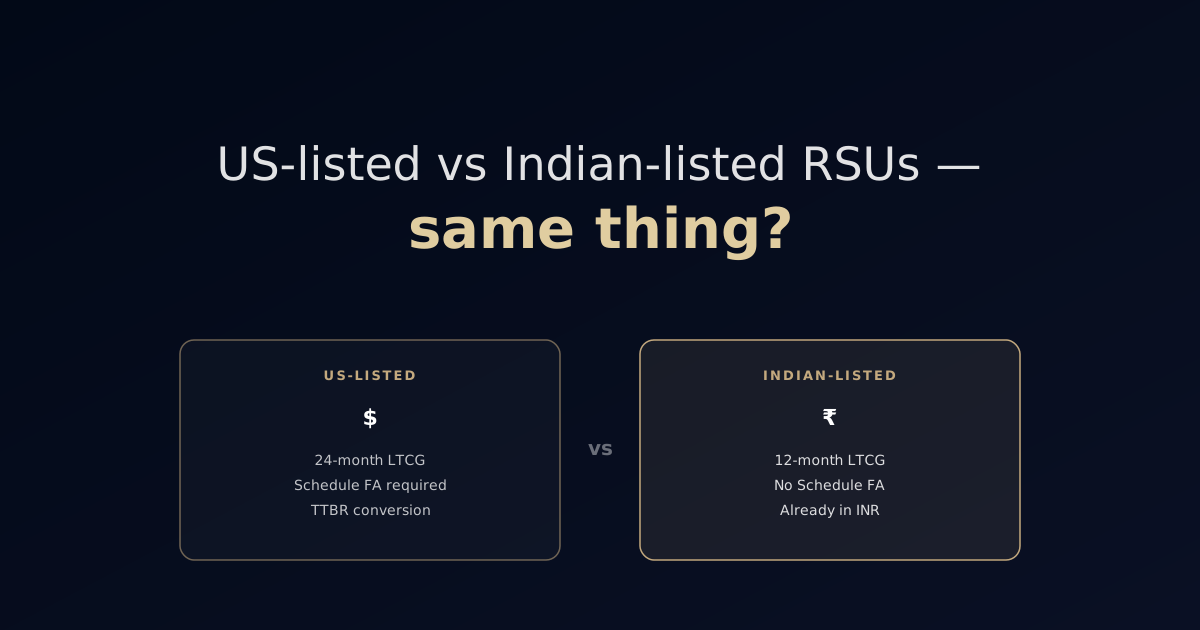
RSU is RSU, right? You get shares, they vest, you sell, you pay tax. The basics are the same. But when you dig into the details, there are meaningful differences depending on where the stock is listed — and those differences affect your taxes, your brokerage setup, and what paperwork you file every year.
The Fundamental Split
US-listed RSUs: These are shares in companies listed on US exchanges — NYSE, NASDAQ. Google, Amazon, Microsoft, Meta, Qualcomm, Broadcom, Salesforce. Shares land in a US brokerage account (Schwab, Fidelity, etc.). You're holding a foreign asset.
Indian-listed RSUs: These are shares in companies listed on Indian exchanges — NSE or BSE. Freshworks, Zomato, Swiggy. Shares land in a Indian demat account. You're holding a domestic asset.
The Holding Period Difference
This is the most practically significant difference.
For US-listed shares (foreign unlisted from India's perspective): LTCG applies if you hold for more than 24 months from the vest date. STCG if held for less.
For Indian-listed shares: LTCG applies if you hold for more than 12 months. STCG if held for less. The threshold is half.
This means that if you're at Freshworks or Zomato, your shares qualify for LTCG treatment after 12 months — not 24. That's a meaningful difference in planning.
📊 TABLE: "US-Listed vs Indian-Listed RSUs — Key Differences" [Insert here: Full comparison table] Feature | US-Listed RSUs (Google, Amazon, MSFT, etc.) | Indian-Listed RSUs (Freshworks, Zomato, Swiggy) Brokerage account | US brokerage (Schwab, Fidelity, E*TRADE) | Indian demat account LTCG holding period | 24 months from vest date | 12 months from vest date STCG tax rate | 20% (slab rate for unlisted — wait, these are listed in US) | 20% (STT applicable) LTCG tax rate | 12.5%, above ₹1.25L/year exemption | 12.5%, above ₹1.25L/year exemption Schedule FA required? | Yes — foreign asset disclosure mandatory | No — domestic asset ITR form | ITR-2 or ITR-3 | ITR-1 possible if no other complex income Currency conversion | Required (SBI TTBR) | Not required (already INR) STT (Securities Transaction Tax) | Not applicable | Applicable on sale
The Schedule Fa Difference
For US-listed RSUs, you are holding a foreign financial asset. This requires annual disclosure in Schedule FA of your ITR, regardless of whether you sold anything, and even if the account had zero balance at year-end (if it was active during the calendar year).
For Indian-listed RSUs, the shares are in an Indian demat account. There is no Schedule FA requirement. The filing is simpler.
This is one reason some employees prefer the simplicity of Indian-listed company equity — though the investment and tax outcomes may differ, the compliance is more straightforward.
The Currency Question
For US-listed RSUs, every tax calculation involves a currency conversion step: the FMV in USD must be converted to INR using the SBI TTBR rate. This introduces an additional layer of calculation and a specific legal requirement (use the right date's rate, use the SBI rate, not your bank's rate).
For Indian-listed RSUs, everything is already in INR. No conversion needed.
Which Platform Your Shares Are on
US-listed: Your shares are in a US brokerage — Schwab, Fidelity, Morgan Stanley, E*TRADE. You log in with a US-based interface. The reports are in USD.
Indian-listed: Your shares are in a CDSL or NSDL demat account, accessible through your broker (Zerodha, HDFC Securities, etc.). The reports are in INR.
How Rovia Can Help
If you hold both US-listed and Indian-listed equity — from different companies or from a company that listed on Indian exchanges — the planning gets layered. Different holding periods, different filing requirements, different currency considerations.
Rovia handles both. Whether your shares are in Schwab or in a demat account, we'll help you build a single coherent plan across your entire equity portfolio.
Source: Holding period for listed vs unlisted equity — Income Tax Act, Section 2(42A): https://incometaxindia.gov.in


