If you've been at a tech company for three or four years and your equity feels more complicated than you expected, there's probably a reason: you're now vesting from multiple grants at the same time, and nobody sat you down to explain that this was going to happen.
Refresher grants are how companies keep you. Understanding them is how you keep track of what you actually have.
What a Refresher Grant is
A refresher grant is an additional RSU award issued after your original new-hire grant. It has its own vesting schedule — typically another four-year schedule starting from the date it's issued.
Companies issue refreshers for a few reasons: - To reward performance (usually tied to annual reviews) - To retain employees who are approaching the end of their initial grant - To adjust total compensation as the employee becomes more senior
The timing varies. Google and Meta tend to issue refreshers annually, tied to performance ratings. Amazon and Microsoft have their own cadences. The size of the refresher generally tracks seniority and performance — a strong performance rating at L5 or L6 at Google can mean a meaningful RSU refresh.
The Compounding Problem
Here's what happens over time if you stay at one company:
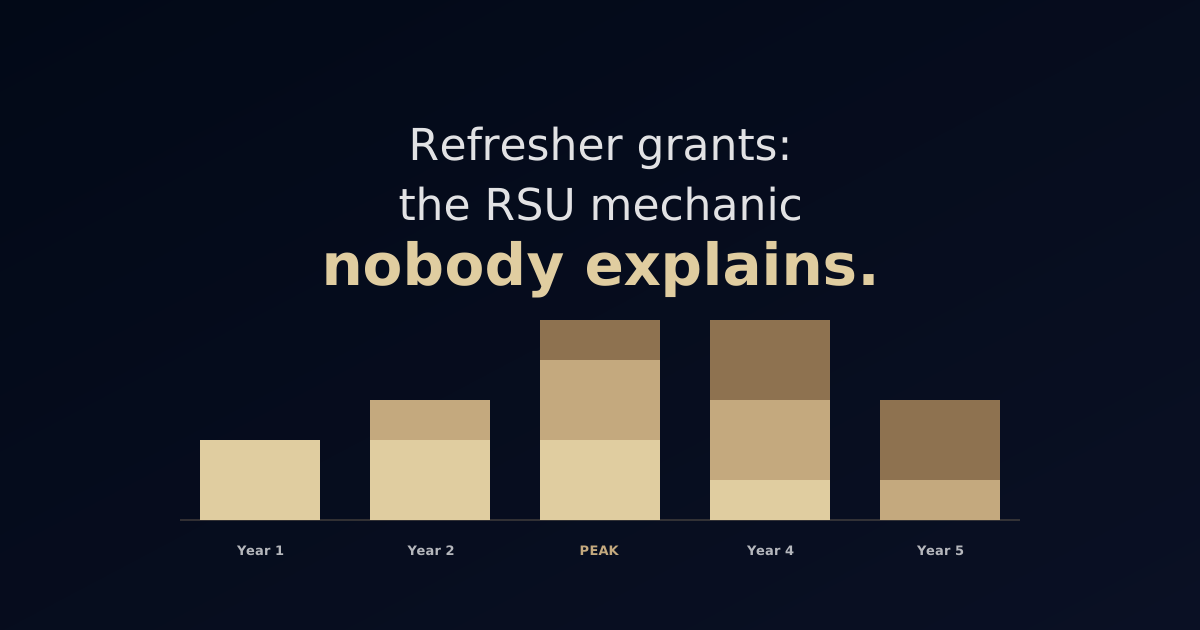
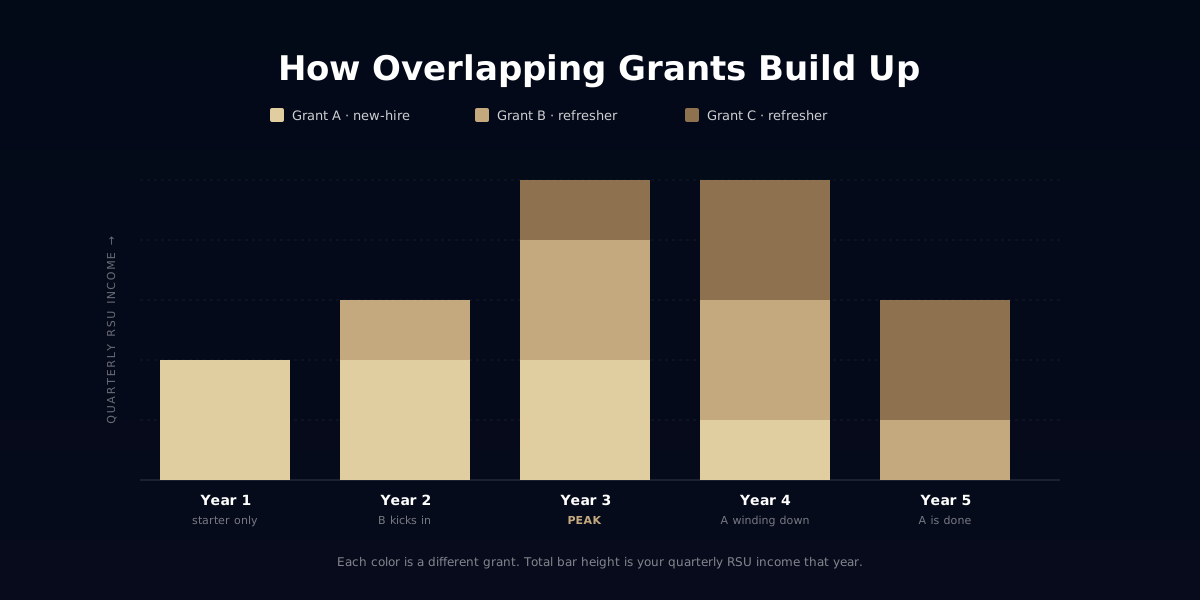
Year 1: Only the original grant is vesting. Year 2: Original grant + Year 2 refresher, both vesting simultaneously. Year 3: Original grant + Year 2 refresher + Year 3 refresher. Year 4+: Multiple overlapping grants, each on its own schedule.
Your quarterly "RSU income" is now a blend of several grants. This has three consequences:
One, your effective equity income grows faster than you might expect, because new grants stack on top of old ones. A mid-level Google engineer who's been there for five years might be vesting significantly more per quarter than they did in year one.
Two, the concentration in your employer's stock keeps rebuilding. Even if you sell some shares from your original grant, the refreshers keep adding new ones. The concentration doesn't naturally go away on its own.
Three, the lot tracking becomes more complex. Each grant has its own FMV on its own vest dates. For tax purposes, shares from a 2023 refresher and shares from a 2021 original grant are different lots with different cost bases and different LTCG timelines.
WHAT REFRESHERS MEAN FOR YOUR "4-YEAR PLAN"
A lot of people think about RSUs with a four-year mental model: "I'll get my grant over four years, and then it's done."
This is accurate for a single grant. But if you're staying longer than four years — and most people at senior levels do — the equity doesn't stop. It continues through refreshers. And for senior employees, the refreshers can be larger than the original new-hire grant.
This also means that the moment you stop receiving refreshers is the moment your quarterly RSU income begins declining. For long-tenured employees, that's a significant income event — and one worth building into your financial planning.
What Happens to Refreshers If You Leave
Same as with your original grant: unvested portions of refresher grants are forfeited when you leave. Vested portions are yours.
This means the calculation of "what am I leaving on the table?" when you quit becomes more complex. You're not just calculating one grant's cliff — you might be forfeiting unvested portions of two or three overlapping refreshers.
A complete exit cost calculation needs to account for all active grants, not just the most recent one.
How to Track Your Grants
Your brokerage platform (Schwab, Fidelity, etc.) will list each active grant separately in your account. Log in and look for a section called "Awards" or "Equity Awards" — it will show you each grant, its original size, how much has vested, and how much remains on what schedule.
Do this exercise once a year at minimum. It takes 20 minutes and gives you a complete picture of your forthcoming RSU income.
How Rovia Can Help
If you're looking at your equity account and the numbers don't quite add up — or if you want to understand exactly what you're vesting across all active grants and when — Rovia can map the entire picture for you.
We'll pull together your grants, their timelines, their tax implications, and show you the full equity income you can expect. That's the foundation of any sensible plan.


