
Manage your RSU taxes
Sell the right lots and you keep more of what you’ve earned.

Your RSU statement, finally readable
Drag to see the same lots with Rovia.
* Cost basis may not reflect adjusted basis and is provided for informational purposes only. Shares withheld for taxes (SH) are shown net. Sales are processed first-in, first-out (FIFO) unless specific lot instructions are received prior to execution. This statement does not constitute tax advice; consult your tax advisor regarding reporting obligations in your country of residence.
Sell 10 shares from Lot 07. Est. tax ₹0 — oldest-first would cost ₹11,440.
Understand your tax cycle
You’re taxed twice on your RSUs. Know what to expect.
Grant
Your company promises you shares. Nothing is taxed yet.
Vest
The shares become yours. Their value is added to your salary.
Taxed as salaryHold
Sell whenever you like. Hold past 24 months from vest and your rate drops.
Sell
Your gain is taxed at your slab before 24 months, 12.5% after.
Taxed as capital gain
Keep more of every sale
Rovia reads every lot and tells you which one to sell, so less of your gain goes to tax.
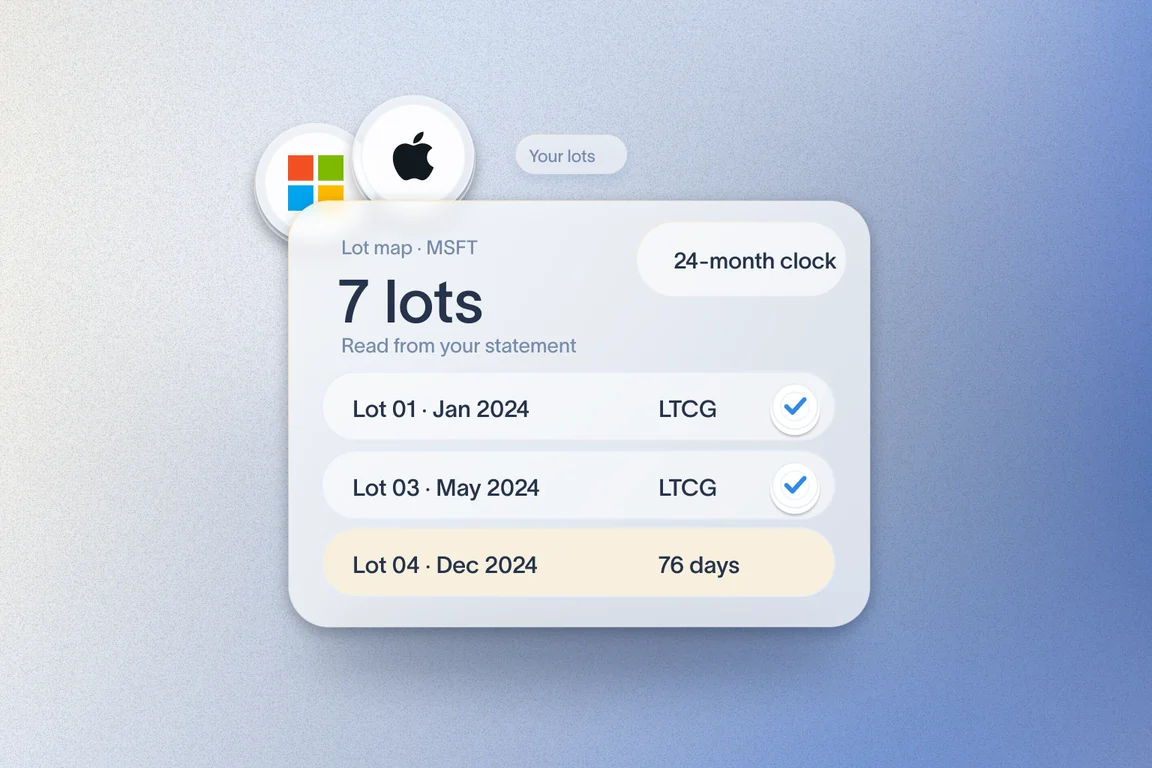
Know the tax on every lot, to the day
Every vest with its cost in ₹ and $, today’s gain, and a countdown to 24 months, when your rate drops to 12.5%.
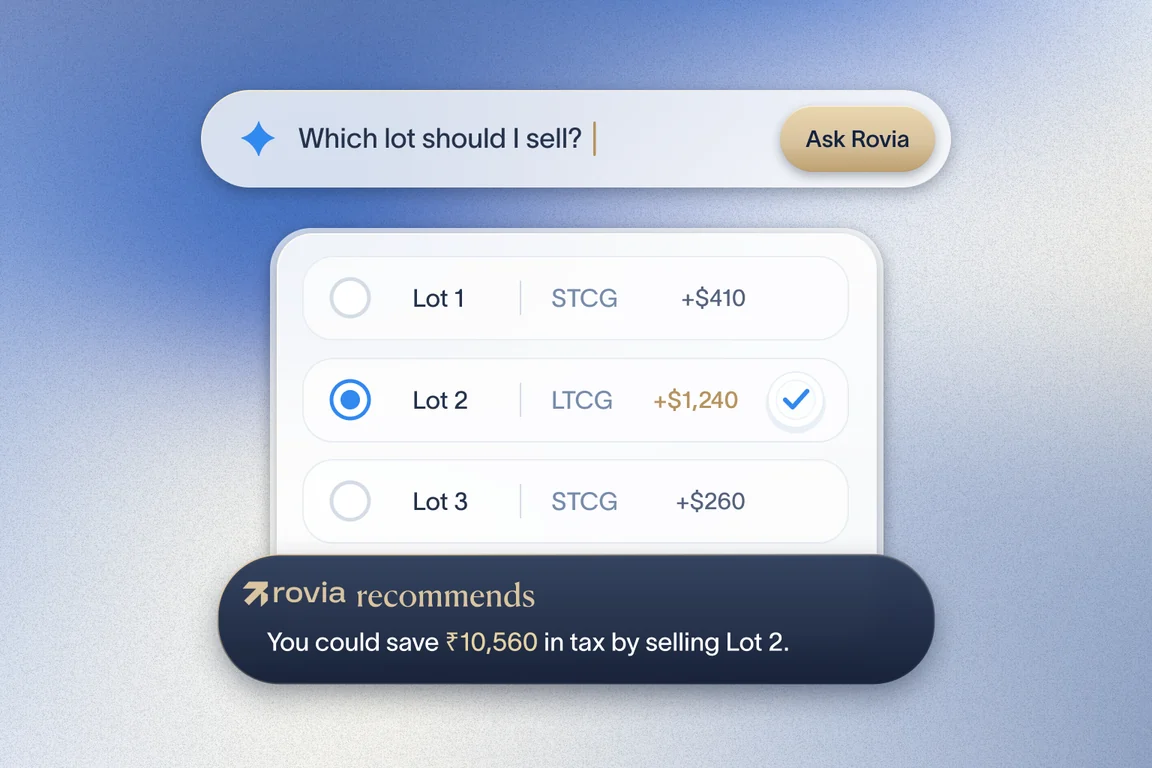
Rovia recommends the best lot to sell
Before you place an order, Rovia shows which lot costs you the least tax, and how much you keep compared with selling oldest-first.
Tax reports your CA won’t send back
Lot-level gains for your capital-gains schedule and the holdings detail Schedule FA asks for, ready at year-end.

How it works
Set up your account
Sign up and finish KYC in a few quick steps.
Transfer your shares
Move eligible shares across without selling a single one.
Pick a lot, then sell
Choose the lot that costs you least. You stay in control of the trade.
Frequently asked
questions
Still stuck? Talk to usNo. Rovia’s tools are educational — they show lot-level gains, holding periods and estimates so you and your CA can decide. Always confirm treatment for your own return.
Each lot has its own vest date and cost basis. Those differences decide the gain or loss, and whether a sale is STCG at your slab or LTCG at 12.5%.
No. Capital losses generally offset eligible capital gains, not salary income. Short-term and long-term losses also have different set-off rules.
Not for insights — upload your brokerage statement and Rovia reads your lots. To sell a specific lot through Rovia, the shares transfer first so Rovia is the broker executing your pick.
Employer brokers typically sell oldest-first by default. On Rovia you choose the exact lot before the order goes in.
Rovia’s year-end report gives lot-level gains for your capital-gains schedule and the holdings detail Schedule FA asks for — numbers your CA can file from.
Eligible capital losses may be carried forward subject to filing deadlines and applicable rules. Your tax adviser can confirm the treatment for your return.
No. The example compares gains and estimated tax before your specifics. Your tax depends on residency, slab, currency conversion and your other gains or losses.
Buy US assets
Explore US assets